SAE 100R1 Wire Braid Hydraulic Hose: Full Analysis of Selection and Application of American Standard
2026-10-04
1. American Standard System and Product Positioning
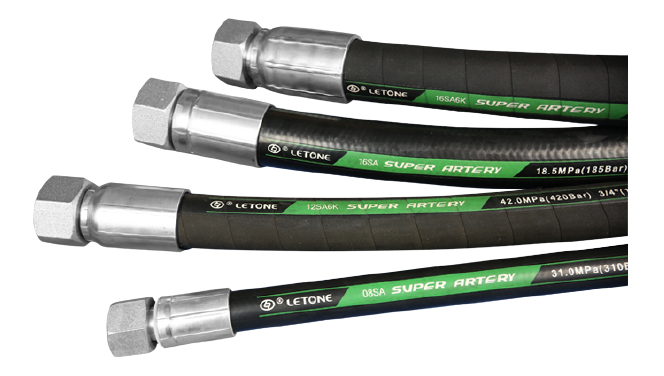
The SAE 100R1 wire braid hydraulic hose is a single-layer steel wire braided hydraulic oil pipe manufactured in strict accordance with the SAE J517 American standard specification. It is also compatible with international general standards such as EN853 1SN and ISO 1436 TYPE 1SN, and is one of the most widely circulated basic hydraulic hose types in domestic construction machinery supporting and foreign trade export scenarios. As a typical American standard high-pressure hydraulic oil pipe, it is designed according to the American standard system of inch-based bore size, psi pressure unit and American standard threaded interface. There are differences in dimensional tolerance and joint matching mode between this product and domestic GB/T 3683 standard products. It is necessary to clearly mark the American standard system during procurement to avoid interface mismatching.
This product is positioned for medium and high-pressure conventional working conditions. Its pressure is set by bore size classification under the American standard system, which can meet the pressure-bearing requirements of the main and auxiliary oil circuits of most loaders, forklifts and agricultural machinery, and takes into account both standard versatility and cost advantages.
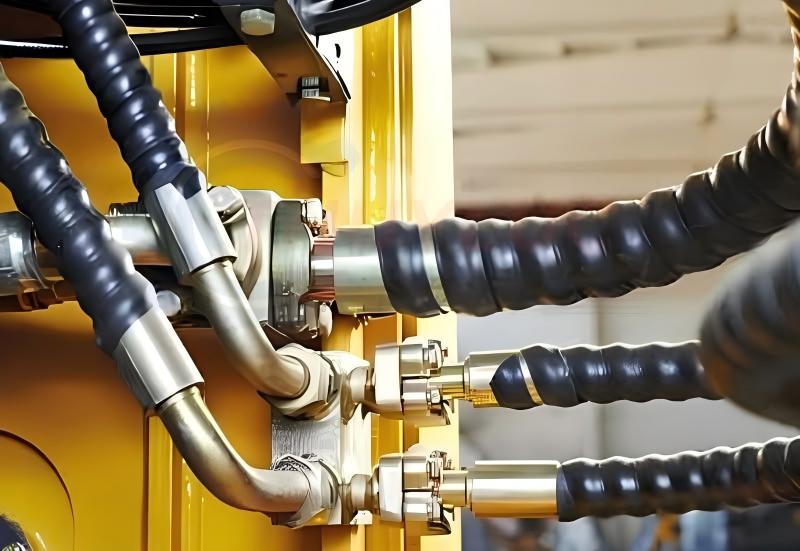
2. Structural Composition and High-Pressure Performance
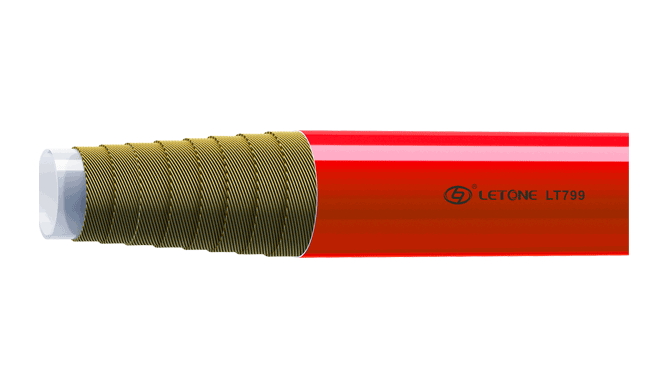
The standard SAE 100R1 wire braid hydraulic hose adopts a three-layer composite design: the inner layer is made of oil-resistant synthetic rubber, which can stably convey petroleum-based hydraulic oil, water glycol, lubricating oil and other media for a long time. The middle layer is a single-strand high-tensile steel wire cross braided reinforcement layer, with the braiding angle precisely controlled between 45° and 60°, forming a uniformly stressed mesh structure. The outer layer is a wear-resistant and weather-resistant synthetic rubber protective layer, which resists ultraviolet radiation, mechanical friction and mild chemical corrosion.
In terms of performance, the full series meets the 4:1 safety factor, and the burst pressure is no less than 4 times the rated pressure. The maximum working pressure of the 1/4 inch bore specification can reach 22.5MPa (3250psi), the 3/8 inch specification is about 17.9MPa (2600psi), and the 1 inch specification is 8.7MPa (1262psi). The temperature adaptation range is -40°C to +100°C, the upper temperature limit is 50°C when conveying air, and no more than 80°C when conveying water-based emulsions. This hose has excellent flexibility, and its minimum bend radius is only 60% of that of the double-layer braided hose with the same bore size, making piping and routing more flexible.
3. Typical High-Pressure Hydraulic Application Scenarios
The American standard high-pressure hydraulic oil pipe is widely adapted to medium-pressure power transmission systems such as loaders, forklifts, forestry machinery and small industrial hydraulic stations, and is often used in working conditions with relatively stable pressure, such as the connection between hydraulic pumps and valve groups, and oil supply circuits of hydraulic cylinders. Due to the adoption of the American standard dimension system, it has obvious advantages in maintenance and replacement of imported construction machinery and supporting of export equipment. It can be directly matched and replaced corresponding to the original factory part number, reducing the use of transition joints.
It should be noted that its pulse resistance life is lower than that of the SAE 100R2 double-layer braided hose, and it is not recommended to be used in heavy-duty main oil circuits with high-frequency pressure shocks, otherwise early fatigue fracture of the steel wire layer is likely to occur.
4. Selection, Procurement and Acceptance Points
During selection, three core parameters should be confirmed: American standard bore size, system peak pressure and long-term ambient temperature, to ensure that the rated pressure of the hose is more than 1.2 times higher than the system peak pressure. The matching joints must select crimped joints that match the American standard hose, to ensure that the steel wire reinforcement layer is completely engaged with the sleeve.
During acceptance, it is necessary to check whether the hose body mark contains the words "SAE 100R1", production batch and pressure rating. If necessary, a pressure holding test at 1.5 times the rated working pressure shall be carried out. Forbid twisting the hose during installation: a twist exceeding 7° will cause the pressure resistance level to drop by more than 30%, and the bend radius must be greater than the marked minimum value. In daily inspection, pay attention to bulging, wear and oil seepage of the outer rubber layer, and replace the hose immediately when abnormal signs appear.
分享:
Relevant News
-
Letone Hydraulics sincerely invites you to participate in the "Germany Hannover Messe" and "Bauma
-
From April 8th to 14th, Letone Hydraulics invites you to participate in the Bauma Exhibition of Muni
-
The Bauma exhibition in Munich is waiting for you at booth C5.114 / D from April 8th to 14th!
-
The first announcement of the environmental impact assessment of the Luohe Letone Hydraulic Technolo
-
We sincerely invite you to participate in the "2019 Fifth China (Changsha) International Constructi
-
Letone Hydraulic "Public Hose Smart Factory Project with an Annual Output of 50 Million Meters" Pu
-
API 7K and API 16C series products successfully obtained ABS certification issued by American Burea
-
Price of EN856 4SH steel wire hose