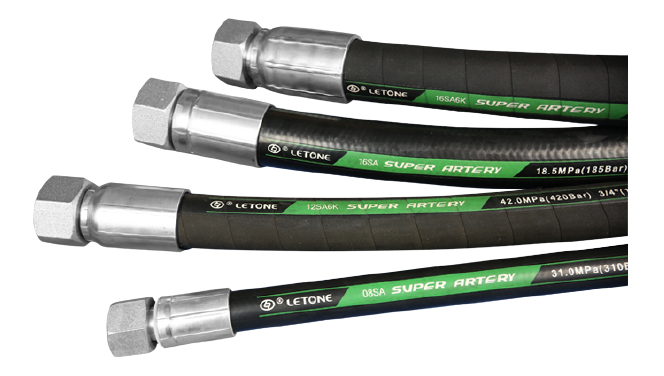
Full Process Production Process Analysis of SAE 100R12 MSHA Steel Wire Spiral Hydraulic Hose
2026-10-05
1. Precise Formula and Pre-Production Pretreatment of Raw Materials
The production of the SAE 100R12 MSHA steel wire spiral hydraulic hose starts from the precise control of core raw materials. The inner rubber layer adopts a special oil-resistant synthetic rubber formula, which strictly controls the ratio of nitrile rubber and functional additives to ensure that the finished product will not experience swelling or mechanical property degradation when exposed to petroleum-based hydraulic oil and water-based emulsions for a long time in the temperature range of -40°C to +121°C. The outer rubber layer must be additionally added with conductive carbon black and flame-retardant components, and pass the pre-inspection of MSHA antistatic and flame-retardant properties, so as to ensure that the surface resistance and combustion characteristics of the outer layer fully meet the U.S. coal mine safety standard requirements.
The reinforcement layer is made of ultra-high-strength high-carbon steel wire, whose surface has been subjected to phosphating pretreatment, which greatly improves the bonding strength with the rubber layer and avoids the peeling and delamination between the steel wire and the rubber layer during long-term high-pressure operation. All raw material batches retain test samples and establish a full-link traceable file, which prevents unqualified materials from flowing into the production process from the source.
2. Inner Rubber Extrusion and Forming Control
The inner rubber layer is formed by one-time extrusion with a high-precision cold-feed extruder. The wall thickness is monitored in real time through an online laser thickness gauge, and the tolerance is controlled within ±0.2mm to ensure that the inner diameter of the entire hose is uniform and consistent, and avoid abnormal fluid pressure loss caused by sudden local inner diameter changes. The extruded inner rubber tube core is immediately covered with an isolation layer to prevent the rubber surface from sticking and being contaminated by impurities, providing a clean base tube blank with precise dimensions for the subsequent steel wire winding process.
This process strictly controls the extrusion temperature and line speed to avoid internal defects such as bubbles and lack of glue in the inner rubber layer. The first piece of each batch must pass the anatomical inspection, and mass continuous production can be carried out only after confirming that there are no internal defects.
3. Four-Layer Steel Wire Cross Spiral Winding Process
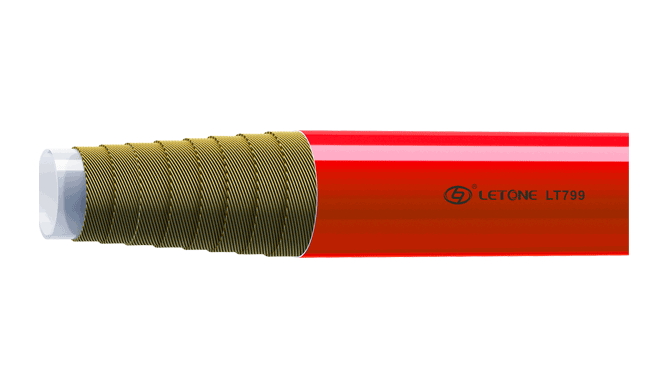
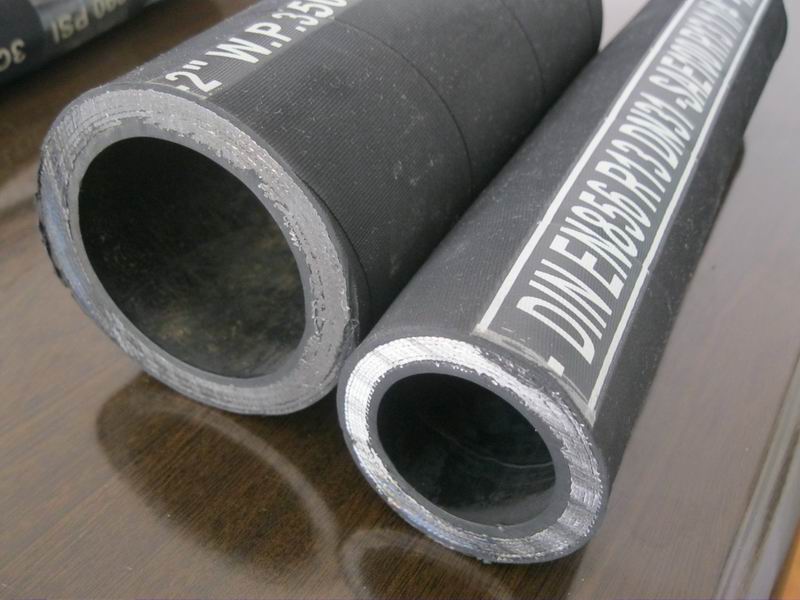
This is the core production link that distinguishes the SAE 100R12 MSHA steel wire spiral hydraulic hose from ordinary braided hoses. The special steel wire winding machine winds four groups of high-tensile steel wires on the surface of the inner rubber tube blank in layers with a precise spiral angle. The winding directions of two adjacent layers of steel wires are completely opposite, and a special adhesive paste is coated between the layers to ensure that the steel wire layer and the rubber are completely integrated.
During the winding process, the tension of each steel wire is controlled accurately in real time to ensure that each steel wire is evenly stressed, so as to avoid the decline of the finished product's pressure-bearing capacity caused by local stress concentration. The mesh force-bearing structure formed by the interlaced four layers of steel wires makes the anti-pulse fatigue life of the hose 3 to 5 times that of ordinary double-layer braided hoses, which fully meets the dynamic pressure-bearing requirements of SAE 100R12 standard for 28MPa high-pressure working conditions.
4. Intermediate Rubber and Outer Rubber Composite Extrusion
After the steel wire winding is completed, the intermediate adhesive layer is uniformly extruded and coated on the surface of the winding layer first, filling the gaps between the steel wires to eliminate the voids between the steel wires and prevent high-pressure fluid from permeating and flowing between the layers. Then the outer rubber layer is covered at one time through the co-extrusion process, and the outer rubber layer with uniform thickness completely covers all the steel wire contours, with a smooth surface free of bulges and depressions.
The formula of the outer rubber layer strictly matches the MSHA certification requirements. The surface resistance of the finished product is controlled in the range of 10⁶ to 10⁹Ω, and it has excellent antistatic, flame-retardant, wear-resistant and ozone aging-resistant properties, which can resist the risks of friction, corrosion and open flame in complex underground working conditions.
5. High-Pressure Vulcanization and Post-Treatment Process
The composite tube blank is immediately sent into a large vulcanization tank, and subjected to long-term constant pressure vulcanization with high-temperature saturated steam above 150°C. Through the collaborative control of three parameters: precise temperature, pressure and time, the inner and outer rubber layers and the steel wire layer undergo sufficient cross-linking reaction to form an integrated structure completely bonded, completely eliminating the hidden dangers of stratification and delamination.
After vulcanization, the hose is cooled and cut to fixed length, then each hose is subjected to a 30-minute pressure holding test at 1.5 times the rated working pressure. At the same time, the antistatic and flame-retardant properties are sampled and re-inspected. After all indicators meet the standards, permanent marks such as SAE 100R12 identification, MSHA certification number, pressure rating and production batch are continuously embossed on the hose surface, and finally the finished products are packaged and put into storage.
6. Full-Process Quality Inspection System
Multiple online inspection checkpoints are set up in the whole production process: incoming raw material inspection, inner rubber wall thickness online inspection, steel wire winding tension inspection, finished product hydrostatic burst test, pulse fatigue sampling inspection, MSHA flame-retardant and antistatic special inspection. All inspection data are archived to realize full life cycle traceability from raw materials to finished products, ensuring that every hose leaving the factory fully meets the dual standard requirements of SAE 100R12 and MSHA, and preventing unqualified products from flowing to high-risk operation scenarios.
分享:
Relevant News
-
Letone Hydraulics sincerely invites you to participate in the "Germany Hannover Messe" and "Bauma
-
From April 8th to 14th, Letone Hydraulics invites you to participate in the Bauma Exhibition of Muni
-
The Bauma exhibition in Munich is waiting for you at booth C5.114 / D from April 8th to 14th!
-
The first announcement of the environmental impact assessment of the Luohe Letone Hydraulic Technolo
-
We sincerely invite you to participate in the "2019 Fifth China (Changsha) International Constructi
-
Letone Hydraulic "Public Hose Smart Factory Project with an Annual Output of 50 Million Meters" Pu
-
API 7K and API 16C series products successfully obtained ABS certification issued by American Burea
-
Price of EN856 4SH steel wire hose