Price of EN856 4SH steel wire hose
2026-07-08
1. Applicable Standards
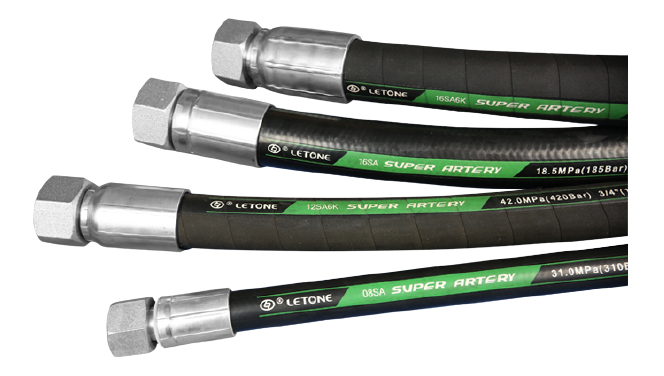
EN856 4SH is an ultra-high pressure hose category under the European standard DIN EN 856 for spiral steel wire reinforced hydraulic rubber hoses, corresponding to Chinese national standard GB/T 10544-2013 and international standard ISO 3862. It is a standard high-pressure hydraulic pipeline widely used in construction machinery and mining industries worldwide.
Standard Definition
EN856 standard classifies spiral hoses into 4SP, 4SH, R12 and R14. 4SH refers to four-layer alternately spiral ultra-high pressure flexible spiral hose. Compared with 4SP hoses of the same standard, it features smaller minimum bending radius, better flexibility and longer pulse fatigue life, suitable for heavy-duty working conditions with frequent pressure shocks.
Mandatory Performance Requirements of the Standard
Pulse test: Comply with ISO 6803, standard pulse service life ≥400,000 times, applicable to equipment with continuous pressure fluctuation such as hydraulic breakers and impact drills;
Temperature range: Long-term operating temperature -40℃ ~ +100℃, short-term peak temperature up to 121℃;
Compatible media: Mineral hydraulic oil, water-glycol, emulsion and biodegradable hydraulic oil; incompatible with phosphate ester fire-resistant fluid and castor oil-based media;
Adhesion strength: Peel strength between rubber layers and steel wire layers ≥2.5kN/m to prevent delamination and degumming failure;
Burst safety factor: Minimum burst pressure ≥4 times rated working pressure to ensure safety of high-pressure systems.
Applicable Nominal Diameter Range
The standard covers full specifications from DN6 to DN51, meeting fluid transmission demands of small hydraulic tools and large-flow oil circuits of large mining equipment.
2. Internal Structure of the Hose
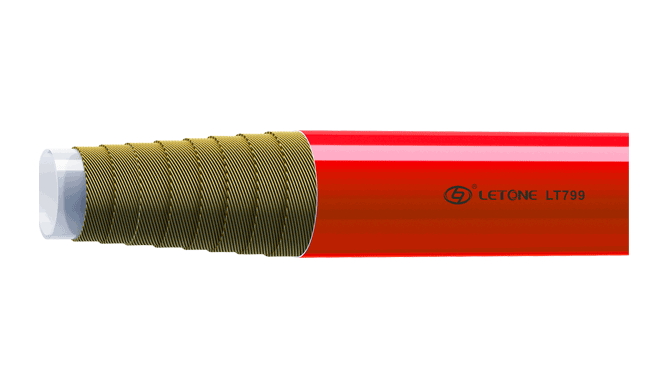
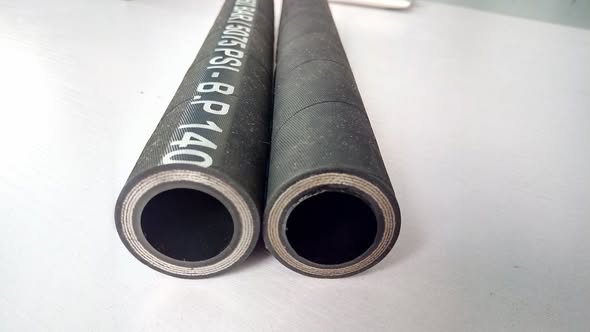
EN856 4SH adopts a composite structure of three rubber layers plus four layers of alternately spiral steel wires with isolating rubber filling between layers. The structure from inside to outside is as follows:
Inner Liner
Oil-resistant and water-resistant synthetic rubber with dense and smooth surface, which reduces fluid transmission resistance, isolates steel wire reinforcement from corrosion by hydraulic oil and avoids swelling during long-term oil delivery.
Intermediate Isolating Rubber Layer
Separates four steel wire spiral layers to avoid friction and abrasion between steel wires, improving overall flexibility and structural stability.
Four High-Tensile Steel Wire Reinforcement Layers (Core Pressure-Bearing Layer)
Four layers of high-strength carbon steel wires are spirally wound in opposite alternating directions to bear force evenly, resisting radial expansion and axial stretching. Under the same nominal diameter, it bears higher pressure than 4SP hose and has far better bending performance than ordinary spiral hoses, enabling flexible wiring in narrow equipment cabins.
Outer Protective Rubber Layer
High-wear, ozone-resistant and anti-aging black synthetic rubber with textured anti-slip surface. It protects the hose from sand friction, ultraviolet radiation, rainwater and engine oil corrosion outdoors, delivering outstanding durability under harsh mining and construction site conditions.
Structural Advantages of 4SH vs 4SP
The optimized steel wire winding angle of 4SH makes the hose softer with smaller minimum bending radius. It is the priority choice for pipelines with frequent bending, narrow installation space and high-frequency shock such as hydraulic breakers.
3. Industry Applications & Matching Machinery
(1) Construction Machinery (Largest Application Scenario)
Excavators: High-pressure pipelines for main pumps, boom/stick cylinder oil lines, dedicated hydraulic breaker hoses (4SH is the industry standard for high-frequency impact due to excellent pulse resistance);
Road Machinery: Loaders, bulldozers, vibratory systems of road rollers, walking oil circuits of motor graders;
Lifting Equipment: Truck cranes, crawler cranes, high-pressure pipelines for luffing, winch and outrigger systems;
Special Engineering Equipment: Rotary drilling rigs, down-the-hole impact drills, high-pressure pumping lines of concrete pump trucks, hydraulic pipelines of aerial work platforms.
(2) Mining Equipment
Open-pit mining: Large mining excavators, mobile crushing stations, rock drills, hydraulic anchor drilling rigs;
Underground coal mines: Roadheaders, shearers, high-pressure pipelines for hydraulic supports, underground loaders;
Aggregate processing: Mobile screening machines, hydraulic crusher impact oil circuits.
(3) Oil & Gas Drilling Equipment
Land drilling rigs, hydraulic power pipelines of fracturing equipment, workover rigs, small hydraulic lifting systems on offshore platforms.
(4) Heavy Industrial Equipment
Metallurgy & Forging: Four-column hydraulic presses, forging hammers, steel rolling equipment, high-pressure oil lines of bending & shearing machines;
Injection Molding & Die Casting: High-pressure injection hoses for large injection molding machines, hydraulic systems of die casting machines;
Port Logistics: Heavy-duty forklifts over 5 tons, container reach stackers, port hydraulic cranes.
(5) Large Agricultural & Forestry Machinery
High-horsepower tractors above 200 HP, large combine harvesters, silage harvesters, logging grapplers, heavy hydraulic reversible ploughs.
(6) Marine & Offshore Equipment
Engineering dredgers, hydraulic winches on fishing vessel decks, hydraulic pipelines for ship hatch covers, high-pressure hoses for marine cranes.
5. Installation & Operation Precautions
5.1 Installation Specifications
The actual bending radius must be larger than the standard minimum bending radius; sharp bends and kinks are prohibited. Reserve extra length for pipeline turning to avoid tensile stress during equipment expansion and vibration.
Hose twisting angle shall not exceed ±2°; long-term torsion will rapidly reduce burst resistance and pulse service life.
Keep away from heat sources such as engine exhaust pipes and high-temperature valves; install heat insulation sleeves in high-temperature areas. Avoid direct friction with sharp metal edges and equip anti-abrasion spring sleeves.
Only matched crimped fittings (BSP, JIC, SAE flange, etc.) can be used; raw thread sealing tape is forbidden. Conduct pressure test at 1.5 times working pressure for 10 minutes after crimping, and no leakage is allowed before installation.
5.2 Medium & Temperature Control
Only compatible with mineral oil, water-glycol emulsion; phosphate ester flame retardant liquid and high-polar chemical media are prohibited.
Long-term oil temperature shall be controlled below 100℃; short-term peak temperature cannot exceed 121℃. Continuous high temperature accelerates rubber aging, delamination and blistering.
Preheat the hydraulic system under no-load before startup in low-temperature environments to prevent cracking caused by hardening of cold hoses during bending.
5.3 System Cleaning & Maintenance
Flush the hydraulic system before installing new hoses. The oil cleanliness must reach ISO 4406 standard 18/16/13. Impurities will abrade the inner liner and cause early internal damage.
Daily inspection: Check outer rubber for cracks, blisters, peeling and joint oil leakage every week. Replace the hose immediately if steel wires are exposed, surface abrasion is severe or frequent leakage occurs.
Service life control: Replace hoses used for hydraulic breakers and impact equipment every 6–12 months; static fixed pipelines shall be replaced within 2 years at most to eliminate safety hazards of hose burst.
5.4 Storage & Scrap Standards
Store in cool, dry, dark areas away from heat sources and heavy stacking; long-term outdoor storage is forbidden.
Scrap standards: Directly discard hoses with exposed steel wires, deep cracks on outer rubber, tube blistering & deformation, joint slipping and leakage, or expired pulse fatigue life.
EN856 4SH four-layer steel wire spiral hydraulic hose features three core advantages: ultra-high pressure resistance, excellent flexibility and long pulse service life. It is a dedicated pipeline for hydraulic systems under heavy load, high-frequency impact and narrow installation space. Production complying with EN856 standard plus standardized installation and maintenance can greatly reduce equipment downtime risks caused by oil leakage and hose burst. Widely applied in high-pressure fluid transmission of construction, mining, metallurgy, oil, marine and other heavy equipment, it is an irreplaceable core fitting for high-pressure fluid conveyance.
分享:
Relevant News
-
Letone Hydraulics sincerely invites you to participate in the "Germany Hannover Messe" and "Bauma
-
From April 8th to 14th, Letone Hydraulics invites you to participate in the Bauma Exhibition of Muni
-
The Bauma exhibition in Munich is waiting for you at booth C5.114 / D from April 8th to 14th!
-
The first announcement of the environmental impact assessment of the Luohe Letone Hydraulic Technolo
-
We sincerely invite you to participate in the "2019 Fifth China (Changsha) International Constructi
-
Letone Hydraulic "Public Hose Smart Factory Project with an Annual Output of 50 Million Meters" Pu
-
API 7K and API 16C series products successfully obtained ABS certification issued by American Burea
-
Price of EN856 4SH steel wire hose